

Below is a list of questions we sometimes get asked about the regeneration. If your question is not on here, please get in touch.
We have also included a 'jargon buster'. This is an explanation of words or phrases specific to housing and regeneration which you may come across on the website or when talking about the regeneration.
When and why was the Aylesbury Estate built?
The Aylesbury Estate was built in the 1960s and 1970s to replace homes damaged by war-time bombing and as a continuation of the slum clearance programme that had started before the war.
What is Notting Hill Genesis delivering through the regeneration?
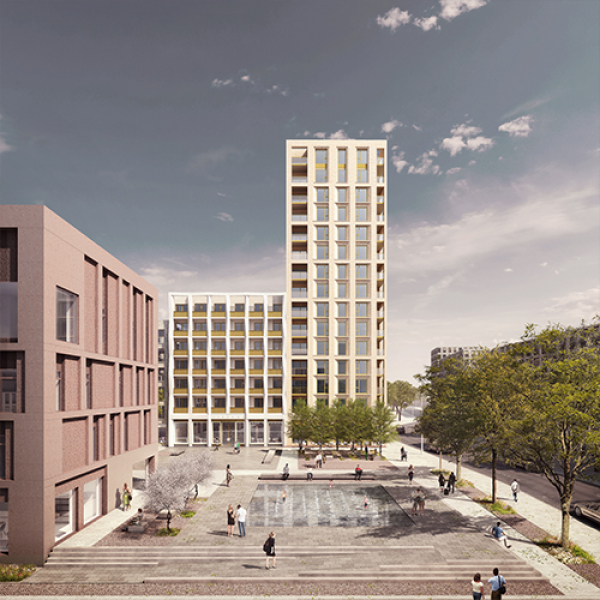
We are committed to delivering a masterplan for 3,500 new homes, 50% of which will be affordable. 75% of the affordable homes will be social rented homes and 25% will be shared ownership or shared equity. At least 30% of the homes across all tenures will have three bedrooms or more.
The regeneration is about more than new homes, community facilities and improved open spaces. The partnership is committed to ensuring that local people experience the social and economic benefits of regeneration, such as employment, education and training and improvements in health and wellbeing.
L&Q (another housing association) delivered an earlier part of the regeneration providing 408 homes on Site 1a (Albany Road) and Site 7 (Thurlow Street).
Why did Southwark Council decide to demolish and rebuild the homes rather than just refurbishing them?
Southwark Council carried out a cost and benefit analysis in 2005. They found that the option to refurbish the existing buildings would be costly but of limited benefit, as it wouldn’t resolve some of the key design problems with the estate buildings and layout. Therefore, redeveloping the whole estate was considered the best option; one which presents long-term benefits for residents and the local area.
How many homes were on the Aylesbury estate before the regeneration project began and how many will be on the estate when it completes?
Originally, there were 2,758 homes on the estate. There will be more than 4,200 new homes in the redevelopment area, as well as new community facilities, when the regeneration is complete.
How many people were living on the Aylesbury estate before the regeneration project began; and how many people will be able to live in the area when it completes?
Originally, about 7,500 people lived on the estate. Southwark Council estimate that roughly 10,500 people will be able to live in the completed development.
What was the breakdown of housing tenure before the regeneration project began and what will it be when it completes?
The tenure was 82 per cent council housing and 18 per cent private before the project began.
When complete, it will be 50 per cent private and 50 per cent affordable. 75 per cent of the affordable housing will be social rent or council housing and 25 per cent shared ownership.
What is the Aylesbury Area Action Plan and how does it affect the Aylesbury programme?
The Aylesbury Area Action Plan (AAAP), formally adopted by Southwark Council in 2010, is the statutory planning document which establishes the framework for future development of Aylesbury Estate.
It focuses on the long-term needs of residents: the economy, employment, housing, shopping, transport, open spaces and the overall look of the area. It considers what physical changes are needed in the area that will make a positive improvement to all of these factors.
The document was approved following extensive consultation with residents and can be viewed here https://www.southwark.gov.uk/planning-and-building-control/planning-policy-and-transport-policy/development-plan/area-action-plans-section/aylesbury-aap.
What are the timelines for the regeneration?
The regeneration is a large project and is expected to take around 20 years. The regeneration is split into phases and information about timelines for the phases will be available on this website as the project progresses. Construction on the first new homes (on the First Development Site) began in 2019 and these will be ready to move into in spring 2022.
How were residents involved in the selection of Notting Hill Genesis as Southwark Council’s development partner?
Consultation took place with the Creation Trust, which includes representatives of the four Tenant and Resident Associations on the estate. Key concerns raised by the residents were discussed and the approach to managing those concerns was incorporated into the procurement process.
Feedback from the Creation Trust and residents has informed the development of Southwark Council’s requirements at each stage. A focus group of five local residents and the director of the Creation Trust were involved throughout and they also met with and presented information to applicants, helping them further understand community issues/perspectives.
Will existing homes continue to be maintained?
The regeneration of the estate will happen over many years, and Southwark Council will continue to maintain and repair the buildings during this time. Works to the communal areas, particularly the lifts and heating, will be carried out as planned.
How will community safety be managed during the regeneration programme?
Southwark Council has established an Aylesbury neighbourhood team to manage the estate over the period of the regeneration. The team acts as a central point from which a range of services are delivered. The team works with Notting Hill Genesis, partners in community safety, the police and local agencies to make sure that the neighbourhood remains a safe and secure environment for existing residents.
What will happen to the existing homes once people have moved out?
Once homes have been vacated, they may be used to offer temporary accommodation to those in need until the time comes that they must be secured ahead of demolition.
How will the new properties and the land on the Aylesbury be managed in the future?
Notting Hill Genesis will provide housing management services for most of the new homes it is building, with clear resident involvement so residents can influence decision-making and management. Southwark Council will be responsible for managing and maintaining highways and some public squares.
There are plans for community engagement in managing the public “non adopted shared spaces”, such as parks and open spaces, through resident involvement. These plans will be developed further as the regeneration progresses.
Why are some homes on the First Development Site now Southwark Council homes? I thought they were all Notting Hill Genesis.
The First Development Site is split into three packages: A, B and C. Packages A and B (581 homes) will now be built on behalf of Southwark Council. This will help speed up completion of the social housing, increase the number of social rented homes across the First Development Site and regeneration area as a whole, speed up the rehousing of residents on the estate and support the council’s commitment to building 11,000 new council homes by 2043. Package C will be built and managed by Notting Hill Genesis and will be mixed tenure.
What are the plans to increase safety for cyclists and pedestrians?
Making routes through the estate safer for cyclists and pedestrians has been one of the priorities of the Masterplan. Notting Hill Genesis' design proposal for the Aylesbury area, which has been the subject of extensive local consultation, has sufficient flexibility to comply with the Cycling Strategy. Detailed proposals for each phase of the Aylesbury regeneration will come forward in future years as the development progresses and will have due regard to any policies in place at that point.
Are all rented homes going to be let at social rent rates?
All affordable rented homes will be let at social rent rates (similar to council housing rates). This is different from and a lower rate than ‘affordable rent’ which can be up to 80 per cent of market rents. Some homes will be let at market rents through Folio London.
Can leaseholders sell their properties to Southwark Council now?
Leaseholders who live on the Aylesbury and are thinking of selling their home at any time are encouraged to contact Southwark Council.
How can residents get involved with the regeneration?
There are many ways to get involved in the regeneration. Visit our dedicated Get Involved section to find out about opportunities.
What is Creation Trust and what does it do?
Creation Trust is dedicated to making sure that residents living on the Aylesbury estate receive the benefits of the regeneration of the area. These benefits are not just new homes, schools, community facilities and a much improved park and open spaces, but the social and economic benefits of regeneration, such as employment, education and training, improvements in health and well being, and a reduction in crime and anti-social behaviour.
Visit www.creationtrust.org to find out more.
Shared Ownership
A form of house purchase whereby the purchaser buys a proportion of the dwelling, usually from a local authority or housing association, and rents the rest.
Affordable housing
Affordable housing includes social rented, affordable rented and intermediate housing, provided to households whose needs are not met by the market
Decanting
The process of moving residents from their homes while improvements are carried out. It also describes the process where a block or estate is to be completely redeveloped, and residents are moved to allow redevelopment to take place.
Leasehold
Tenure where the homeowner does not own the freehold, but instead has a long term lease.
London Plan
This is the overall strategic plan for London. It sets out a fully integrated economic, environmental, transport and social framework for the development of the capital to 2031.
Target rent
This is the rent charged for socially rented properties. Rent levels are worked out using a nationally set formula which is based on the value of the property, the number of bedrooms it has and average earnings for a manual job in the area.
Extra care
This is housing which is designed for older people (over 55) and which provides a round the clock care and support service based at the scheme that enables the residents to live independently.
Accessibility statement
We hope that whoever needs to use our website can do so easily. We have tried to make it as accessible as possible. If you do have problems, or would like to make any suggestions to improve the site from an accessibility point of view, please give us your feedback.
Change colours and fonts In this section you can adapt this website to meet your needs. The settings you create on this page will be saved for future visits. If you wish to return to the standard settings, click the “Reset site settings” button.
Text preferences
Text size
Font
Letter spacing
Colour Preferences
Preview
Please note, in order to remember your preferences as you navigate through the site, a cookie will be set.